Food Processing & Commercial Kitchen Cleaning Guides
Bakery and pie-factory cleaning involves several very different soils in the same production area: dry flour and powders, wet dough and starch, butter and shortening, egg and dairy residues, sticky fillings, baked-on grease and carbon. The cleaning method needs to change with the soil, surface, equipment and stage of production rather than relying on one chemical for the whole bakery.
In short: remove loose flour and dry ingredients before introducing wet cleaning where appropriate, remove dough and food residue, clean with chemistry matched to the remaining soil, rinse where required, inspect equipment carefully and sanitise cleaned food-contact surfaces where the site's procedure requires it.
This guide covers commercial bakeries, bread and pastry production, cake and biscuit manufacturing, pie and pasty factories and similar bakery-production environments. The exact cleaning program still needs to reflect the products being manufactured, equipment, allergens, food-safety system and site procedures.
Product directions control. The current label, Product Data Sheet, equipment instructions and site procedure determine dilution, application, contact time, rinsing, surface compatibility and product-use restrictions. Use the current Safety Data Sheet for hazard information, exposure controls, personal protective equipment, first aid, storage, spill response and emergency information. The SDS should not replace the product-use directions.
What makes bakery and pie-factory cleaning different?
Bakery production can create both dry and wet soils during the same shift. Flour, icing sugar and other powders behave very differently from wet dough, butter, shortening, egg, meat or vegetable fillings.
Typical bakery cleaning challenges include:
- loose flour, grain, sugar and other dry powders
- wet dough, batter and starch residues
- butter, margarine, shortening and vegetable oils
- egg, milk, cream and other protein-containing residues
- jam, syrups, chocolate and sticky fillings
- baked-on grease, carbon and burnt food in ovens and hot equipment
- food residue around mixers, dividers, moulders, sheeters and conveyors
- allergen cross-contact between products and production runs
- trays, racks, utensils, bowls and other removable equipment
- floors, walls, drains and waste areas affected by mixed flour and grease.
Pie and savoury-pastry factories can add potentially hazardous fillings such as meat, dairy and egg to the same production environment. That can increase the importance of temperature control, cleaning, sanitising and production changeover procedures.
How should a bakery or pie factory be cleaned?
-
1
Prepare the area and make equipment safe.
Remove or protect exposed ingredients, finished products and packaging. Before reaching into mixers, dividers, sheeters, conveyors or other machinery, follow the site's plant-isolation and equipment procedure.
-
2
Remove loose flour and dry ingredients first where appropriate.
Remove loose flour, sugar, crumbs and other dry residues using the site's approved method before introducing water where this suits the equipment and production process. Unnecessary wetting can turn loose flour and powder into sticky residue that is harder to remove.
-
3
Remove dough, fillings and gross food residue.
Scrape or otherwise remove accessible dough, batter, pastry, fillings and food debris before applying detergent. This reduces the amount of soil the cleaning chemical needs to handle.
-
4
Match the cleaner to the remaining soil.
Light routine soil, fats and oils, heavy protein, baked carbon and mineral deposits can require different chemistry. Confirm the surface material before stronger alkaline, caustic, chlorinated or acidic products are introduced.
-
5
Clean accessible equipment surfaces and removable components.
Follow the equipment manufacturer's instructions for dismantling, cleaning and reassembly. Pay particular attention to bowls, paddles, hooks, rollers, guards, seams, undersides and transfer points where dough and food residue can remain.
-
6
Rinse where required and inspect the result.
Remove loosened soil and detergent according to the current product directions. Inspect the cleaned surface before moving to sanitising or reassembly.
-
7
Sanitise cleaned food-contact surfaces where required.
Use the site's selected food-area sanitiser or documented combined cleaner-sanitiser process and follow the current concentration, contact-time and rinse or no-rinse directions.
-
8
Verify, reassemble and release equipment.
Reassemble machinery according to its instructions and complete any required inspection, allergen-changeover verification, cleaning record or corrective action before production restarts.
Why should flour and dry bakery residues be removed before wet cleaning?
Loose flour is usually easier to control before it is mixed with water, grease or wet dough. Introducing moisture too early can create a paste that sticks to frames, seams, floors and equipment.
Flour dust also needs to be treated as a worker-health issue rather than simply a housekeeping problem. WorkSafe Victoria identifies flour and other dusts as substances that can trigger occupational asthma in food and beverage manufacturing.
Control flour dust as well as visible flour. Use the site's dust-control method and avoid cleanup practices that unnecessarily create airborne flour clouds. Ventilation, extraction and other workplace controls should reflect the site's occupational-health risk assessment.
This is separate from food hygiene. A method that removes visible flour safely may still need to be followed by detergent cleaning and sanitising where the surface, food process or changeover procedure requires it.
Quick guide: bakery soils, cleaning methods and chemical choices
| Bakery cleaning problem | Product examples — check suitability | Main selection point |
|---|---|---|
| Loose flour, sugar and dry powders | Physical dry-soil removal first | Control loose dry material before wet cleaning where appropriate. Use the bakery's approved dust-control method rather than choosing a chemical first. |
| General or non-food-contact hard-surface cleaning | Agar Wipe Away, Agar Citra-Mist | General spray-and-wipe cleaning for suitable washable environmental surfaces. These products are not presented here as the default cleaner for direct food-contact working surfaces. |
| Butter, shortening and routine oily films | Whiteley Tempo HD, Agar Speed | Match cleaner strength to the actual grease load. Neutral chemistry may be sufficient for routine oils; heavier grease can require stronger degreasing. |
| Heavy fat, protein, egg and greasy processing soil | Agar Active Break, Agar Presto | Strong alkaline chemistry for compatible surfaces where lighter detergent is insufficient. Check aluminium and other material restrictions. |
| Large equipment, walls and vertical processing surfaces | Agar Foam Up | Foaming cleaner-sanitiser for compatible kitchen and food-processing surfaces where foam contact is useful. |
| Combined cleaning and sanitising | Agar Single Step, Agar HygieniCLEAN | Use only where the current product directions and bakery procedure support a combined cleaner-sanitiser process. |
| Baked-on grease, carbon and burnt food | Agar Grill Clean, Agar Combi-Oven Cleaner | Specialist alkaline oven chemistry. Match the cleaner to the equipment and observe surface restrictions. |
| Mineral scale and hard-water deposits | Agar Scale Force | Acidic descaling chemistry for compatible equipment. Do not apply to aluminium or other incompatible soft metals. |
| Manual wash-up | Whiteley Resolve DishClean | Manual washing of suitable bowls, utensils, crockery, trays and cookware. |
| Machine pot washing and suitable greasy filters | Agar Potwash | Commercial machine detergent and documented soak-tank application for suitable greasy aluminium rangehood filters. |
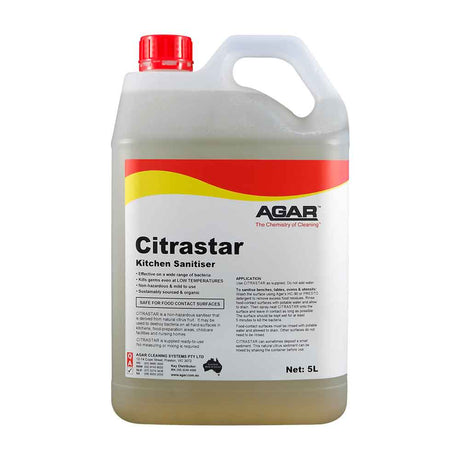
| Separate food-area sanitising | Agar Powerquat, RF-12, Ready 2 Go, Citrastar | Sanitise surfaces after cleaning. Contact time, concentration and rinse or no-rinse directions are product-specific. |
For a deeper comparison of the chemistry in this table, see the Commercial Kitchen & Food Processing Cleaning Chemicals Guide .
Some specialist products named in this guide may not yet have an individual Janitorial Depot online product page. Contact Janitorial Depot if you need product matching or recurring supply for a product that is not currently listed online.
How should bakery mixers, sheeters and dough-processing equipment be cleaned?
Mixers, sheeters, dividers, moulders and similar equipment can hold flour, dough, fat and filling residues around moving components, guards, joints and removable parts.
Make the equipment safe before cleaning. Remove loose dry material and accessible dough before applying cleaning solution. Where the manufacturer allows components to be removed, clean and sanitise those components according to the bakery procedure before reassembly.
A light oily film may only require a suitable neutral or general detergent. Heavy fat, egg or protein soil may require a stronger alkaline cleaner on compatible surfaces.
Do not use strong chemistry simply because the machine is difficult to clean. Surface material, seals, coatings and manufacturer restrictions still control product choice.
How should bakery benches and preparation surfaces be cleaned?
Remove loose flour, sugar, crumbs and dough first. The cleaning method can then be selected according to the remaining soil.
Benches affected by butter or shortening may need degreasing, while food-contact surfaces should be cleaned and then sanitised where required by the bakery's procedure.
Agar Single Step and Agar HygieniCLEAN are examples of products designed to combine cleaning and sanitising for documented food-processing applications. A combined product should only be used as a one-stage process where its current instructions support that use.
How should bakery ovens and hot equipment be cleaned?
Burnt fat, baked sugar, carbon and food residues need different chemistry from routine bench cleaning.
Agar Grill Clean is designed for baked-on grease, carbon and burnt food on compatible ovens, grills and hotplates.
Agar Combi-Oven Cleaner is designed specifically for combination steamer ovens and can also be used on other compatible ovens, grills and hotplates where the manufacturer permits it.
Always follow the oven manufacturer's cleaning program and the current cleaner instructions rather than assuming every oven cleaner is suitable for every bakery oven.
How should bakery trays, racks and removable equipment be cleaned?
Scrape loose crumbs, dough and baked material before washing. Separate manual-washing tasks from machine-washing tasks so the correct detergent is used.
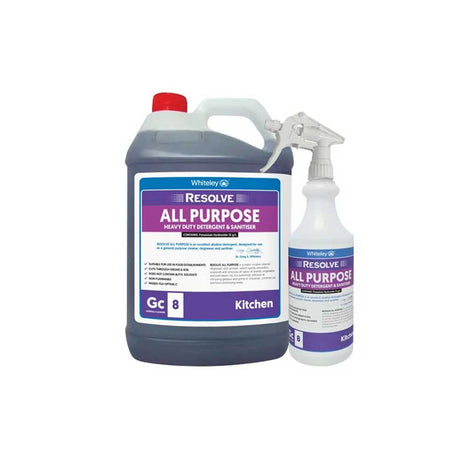
Whiteley Resolve DishClean is intended for manual washing of dishes, utensils, pots and pans.
Agar Potwash is intended for suitable commercial machine-washing applications and Agar also documents a soak-tank application for greasy aluminium rangehood filters.
Do not use manual dishwashing detergent in an automatic warewashing system unless the equipment and detergent manufacturers specifically approve it.
How should proofers, cooling racks and surrounding areas be cleaned?
Proofers, cooling racks and nearby production surfaces can accumulate flour, dough residue, fats and condensation-related soil depending on the bakery process.
Remove loose residue first, then use a cleaning method compatible with the rack, panel or equipment material. Clean food-contact components and sanitise where required before they are returned to production.
Avoid allowing residues to build up simply because an area does not directly touch finished food. Frames, wheels, handles and surrounding surfaces can still transfer soil back into cleaner production zones.
How should bakery floors, walls and drains be cleaned?
Bakery floors often receive a mixture of flour, crumbs, oils, egg wash, dough and traffic soil. Remove loose solids before introducing wet cleaning where appropriate, then select detergent strength according to the remaining soil and floor finish.
Whiteley Tempo HD can suit routine oily and greasy soil where neutral chemistry is sufficient.
Agar Speed provides a stronger general degreasing option for compatible floors, walls, machinery and hard surfaces.
Drains should remain a separate cleaning zone. Keep drain-cleaning tools and heavily soiled floor equipment controlled so they do not transfer soil back onto bakery benches, utensils or food-contact machinery.
How should bakeries manage allergen cross-contact during cleaning?
Bakeries commonly handle ingredients that are subject to mandatory allergen declaration requirements, including wheat, egg, milk, soy, sesame and various tree nuts.
Food Standards Australia New Zealand states that food manufacturers and food retailers are responsible for managing the unintended presence of allergens that can occur through cross-contact.
Allergen cleaning is not the same as microbiological sanitising. Allergen Bureau industry guidance notes that visually clean or microbiologically sanitised equipment can still retain allergenic protein. Cleaning procedures used to control allergen cross-contact should be appropriate to the allergen and process, with validation and routine verification where the site's allergen program requires it.
Product changeovers therefore need more than a visual wipe where allergen cross-contact is a material risk. The bakery's allergen-management program should determine equipment separation, cleaning method, verification and production sequencing.
Allergen Bureau guidance is industry best-practice material; the legal allergen declaration requirements remain in the Food Standards Code.
Which sanitisers can be used after bakery cleaning?
Cleaning and sanitising remain separate functions unless the selected product is specifically documented as a cleaner-sanitiser.
Food Standards Australia New Zealand states that food-contact items need to be cleaned before they are sanitised.
Examples within the approved Janitorial Depot content range include:
- Agar Powerquat — concentrated food-processing sanitiser.
- Agar RF-12 — concentrated food-area sanitiser for cleaned surfaces.
- Agar Ready 2 Go — ready-to-use food-area sanitiser for cleaned surfaces.
- Agar Citrastar — dedicated food-area sanitiser with product-specific finishing directions.
Do not apply one rinse rule or contact time to every sanitiser. Follow the current label and Product Data Sheet for the selected product.
What should be included in a bakery cleaning schedule?
The schedule should identify the actual equipment and production zones in the bakery rather than using one generic frequency for the whole site.
| Schedule field | What to record |
|---|---|
| Area or equipment | Mixer, sheeter, divider, bench, oven, rack, tray, floor, drain or other exact cleaning zone. |
| Food-contact status | Whether the surface directly contacts food. |
| Expected soil | Flour, dough, grease, egg, protein, sugar, carbon, scale or other residue. |
| Allergen/changeover requirement | Any additional cleaning or verification required between allergen profiles or production runs. |
| Cleaning product | Exact cleaner selected for the task. |
| Cleaning method | Dry removal, wipe, scrub, mop, foam, soak, manual wash or equipment-specific method. |
| Rinse requirement | Current finishing direction for the cleaner and application. |
| Sanitiser | Separate sanitiser or documented cleaner-sanitiser where required. |
| Contact time | Current manufacturer requirement where applicable. |
| Frequency | Site-determined frequency based on production, soil, food-safety risk and changeovers. |
| Responsible role | Person or team responsible for the task. |
| Verification | Visual inspection, allergen verification or other site-required check. |
| Corrective action | What happens if the cleaning or verification result is unacceptable. |
Do not automatically label every task daily, weekly or monthly. Frequency should reflect the bakery's production schedule, ingredients, equipment, soil load, food-safety controls and changeovers.
Food Processing Cleaning & Sanitising Resources
Access the Janitorial Depot resource library for food-processing cleaning schedules, verification tools and other operational cleaning resources as they are published.
View Food Processing Cleaning ResourcesVictorian bakeries and pie manufacturers: which classification applies?
There is no single Victorian classification for every bakery.
Safe Food Victoria's current classification guidance distinguishes bakery activities according to the food produced and its food-safety risk. Manufacturer premises producing bakery products with perishable high-risk fillings, including pies, pasties, cream pastries and similar foods, are identified as class 2 examples.
Manufacturer premises undertaking cereal processing and bakery production where the finished food does not require refrigeration can fall into class 3 or class 2 depending on the actual activity and product.
Retail bakery examples are also classified differently depending on whether products are low risk, contain potentially hazardous fillings or have perishable fillings added after baking.
The local council determines the classification for council-registered bakery businesses. Do not assume that a bread bakery, cake manufacturer, cream-pastry business and meat-pie factory all have the same Victorian classification or food-safety requirements.
Common bakery cleaning mistakes
- Adding water to loose flour and powder before dry material has been controlled where dry removal is appropriate.
- Allowing flour dust to become an uncontrolled airborne workplace hazard.
- Cleaning only visible mixer or sheeter surfaces while leaving residue around guards, rollers, joints and removable components.
- Using one detergent for flour, fat, protein, carbon and scale regardless of the soil.
- Treating sanitising as a substitute for detergent cleaning.
- Assuming microbiological sanitising automatically removes allergenic protein.
- Using strong alkaline oven or degreasing chemistry on incompatible aluminium or coated surfaces.
- Using manual warewashing detergent in automatic washing equipment.
- Ignoring the cleaning requirements of racks, wheels, frames and non-food-contact surfaces around production equipment.
- Treating the SDS as the product-use instruction instead of also checking the current label and Product Data Sheet.
Bakery and pie-factory cleaning FAQs
Should flour be wet-cleaned immediately?
Not necessarily. Where the equipment and bakery procedure allow it, loose flour and dry ingredients are generally better controlled and removed before wet cleaning is introduced. Water can turn loose flour into sticky paste and spread it into seams or equipment.
What is the best cleaner for bakery grease and butter?
The cleaner depends on the amount of fat and the surface. Neutral detergent such as Tempo HD may suit routine food oils, while Speed can provide stronger general degreasing. Heavy fat or protein soil may justify stronger alkaline chemistry such as Active Break or Presto on compatible surfaces.
How should a bakery mixer be cleaned?
Make the mixer safe according to the site's isolation procedure, remove loose flour and accessible dough, dismantle removable components where the manufacturer allows it, clean with chemistry matched to the remaining soil, rinse where required and sanitise cleaned food-contact surfaces where the bakery procedure requires it.
Can the same bakery chemical clean and sanitise?
Some products are specifically formulated for both functions. Agar Single Step, HygieniCLEAN and Foam Up are examples of documented cleaner-sanitiser products. Use the combined process only where the current manufacturer directions and site procedure support it.
Does sanitising remove food allergens from bakery equipment?
Do not assume it does. Allergen-control cleaning and microbiological sanitising address different hazards. Allergen Bureau industry guidance notes that visually clean or microbiologically sanitised equipment can still retain allergenic protein. The site's allergen-management program should define cleaning and verification for allergen changeovers.
What should be used for baked-on grease in bakery ovens?
Purpose-designed alkaline oven chemistry such as Agar Grill Clean can remove baked-on grease, carbon and burnt food from compatible equipment. Combination ovens can use chemistry designed for that equipment, such as Agar Combi-Oven Cleaner. Check oven and surface compatibility before use.
How often should a bakery be cleaned?
There is no universal frequency for every bakery. Frequency should be determined by production activity, soil accumulation, equipment, ingredients, food-safety risk, allergen changeovers and the bakery's documented procedures.
Are all Victorian bakeries the same food-premises class?
No. Current Safe Food Victoria guidance distinguishes bakery activities according to the foods produced and their food-safety risk. The local council determines the classification for council-registered bakery businesses.
Continue with the food-processing cleaning guides
- Food Factory Cleaning Guide: Process, Chemicals & Sanitising
- Commercial Kitchen & Food Processing Cleaning Chemicals: What to Use & Where
- Fresh & Chilled Food Processing Cleaning Guide
- Meat Processing, Butcher & Smallgoods Cleaning Guide
- Food Processing Cleaning & Sanitising Resource Library
Need help matching bakery cleaning chemistry?
Browse the current Janitorial Depot cleaning chemical range or contact the team for product matching, specialist Agar or Whiteley products, recurring commercial supply and volume quantities.
View Commercial Cleaning ChemicalsSources and technical references
- Food Standards Australia New Zealand — Cleaning and sanitising
- Food Standards Australia New Zealand — Allergy information for food manufacturers, retailers and importers
- Safe Food Victoria — Classifications for food businesses
- Safe Food Victoria — Local council registered food businesses
- WorkSafe Victoria — Food and beverage production
- Allergen Bureau — Cleaning for allergen management (industry best-practice guidance)
- Agar Cleaning Systems — Active Break, Presto, Foam Up, Single Step, HygieniCLEAN, Grill Clean, Combi-Oven Cleaner, Scale Force, Powerquat, RF-12 and Ready 2 Go.
- Whiteley — Tempo HD and Resolve DishClean.
Safety Data Sheets provide workplace hazard, handling and emergency information. Product selection, dilution, application, contact time, rinsing and surface-use directions should be confirmed from the current product label, Product Data Sheet or other current manufacturer technical documentation as applicable.